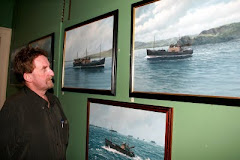
You know what makes me grumpy? All the Grumpy Old Men who appeared on the BBC TV series were younger than me, that's what makes me grumpy. Mutter, mutter....

The Grumpy Old Artist

The Grumpy Old Artist
Would YOU pose for this man???

Exhibition Poster

Exhibition Poster
Catterline Event, 2011

Oil Painting by Jim Tait

Oil Painting by Jim Tait
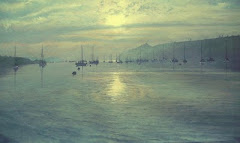
Helford River, Cornwall

Oil Painting by Jim Tait

Oil Painting by Jim Tait
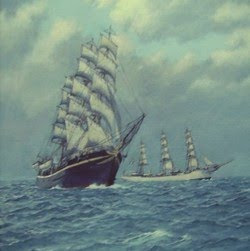
Full-riggers "Georg Stage" and "Danmark"

Other Recent Works

Other Recent Works
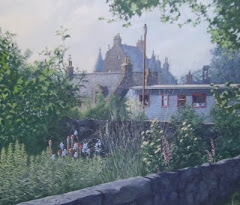
Fordyce Castle and Village

Hay's Dock, Lerwick

Shetland-model Boats at Burravoe, Yell

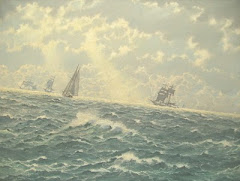
Tall Ships Seascape

The Tour Boat "Dunter III", with Gannets, off Noss

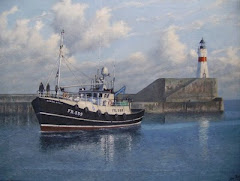
The "Karen Ann II" entering Fraserburgh harbour

Summer Evening, Boyndie Bay

1930s Lerwick Harbour

Johnshaven Harbour

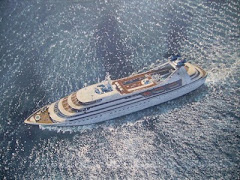
"Seabourn Legend"

Greeting Cards!

Greeting Cards!
Now Available in Packs of Five or in Assorted Sets of Four

Sunday, 4 May 2014

THE LAST MINUTES OF THE "UGIEBRAE"

I've ventured into the realms of maritime history with this recently-completed painting of the last minutes of the Peterhead steam drifter "Ugiebrae".  She was sunk by gunfire after the German submarine (probably the U38) had cut away her fleet of nets and ordered the crew to abandon ship.  This took place on 23rd June 1915, and the "Ugiebrae" was one of 16 casualties of U-boat action in that area that fateful night.  The event effectively put a stop to the herring fishery for the duration of the war.

Ten of the sinkings were of Peterhead drifters, two were from Yarmouth and four were Aberdeen steam line-boats which were also working in the area, to the east and north-east of Shetland.  Some crews were picked up by other steam-boats, but others had to sail or row their lifeboats to land and, in the case of the "Ugiebrae"crew, this involved a 35-mile row to landfall in the Skerries.  The ten men (and a dog!) were exhausted as they approached, and were helped on the last few miles of their journey by men from the Skerries.  From there they would have been transferred to Lerwick and thence home to the Scottish mainland by the regular steamer service.

The newly-acquired lifeboat was of little use for sea-going purposes to the Skerries men, as it was short, bulky and heavier to row and sail than the lighter-built and faster traditional Shetland-model boats, so it was put to good use as the roof of a lambie-hoose" on one of the islands.  It is the current owner of this building, now being restored as a historical project (the lambie-hoose, not the owner!), who commissioned the painting from me.

It's nice to be back working again, and my order-book seems to have filled up again.  I thought I'd get some peace now, but my clients won't let me retire, so I'll continue to fulfil their commissions the best I can, for as long as I'm able to!  I had my appointment with the orthopaedic department of the ARI a fortnight ago.  Apparently the bone density of my spine is not too bad, but my hips are ready to collapse any minute!  I've been o'd-ing on Vitamin D these last few months, but it appears that a more potent mix will have to introduced into my diet soon - ugh!!

Enjoy whatever you're ingesting this week!

Sunday, 13 April 2014

HALF A WORLD APART


Here's a couple of seascape oil paintings, both featuring pelagic fishing vessels, but from completely different stages of development of this fishery.  Both pictures were commissions completed within the last few months.

The first is of the Gamrie steam drifter "Daisy Bank" (BF393), wooden-built by W & G Stephen of Banff in 1911.  At 86 feet LOA, 35 tons net and 28hp, she was fairly typical of this type of vessel.  Apart from her herring fishing career, she also saw Admiralty service in both World Wars, finally being wrecked in 1949.  One of her crew was George Mutch, and his grand-daughter, now living in Queensland, Australia, commissioned the work from me.

The second is of the Whalsay pelagic trawler "Research", steel-built and completed at Flekkefjord, Norway in 2003.  At 232ft LOA and 2,430 grt, she is a good example of the new style of vessel pursuing the herring and mackerel shoals.  The two paintings illustrate how boats have changed in terms of size, power and technology over the last century.

Sunday, 6 April 2014

DA WIRM ATI DA KLIV!

I'll allow you to contemplate on the enigmatic title to this post, which briefly describes my trip "sooth" last weekend.  My Northlink discount travel vouchers for 2013/14 were about to lose their validity, so it was perhaps a form of notional thriftiness which precipitated me towards the Holmsgarth ferry terminal on the afternoon of Friday 28th March.  The last time I made this move was on Thursday April 4th last year, when my sister got married at Drum castle on the Saturday, so it's been a while.

My brother met me at the Aberdeen terminal on Saturday morning, and we soon were on the main road south of the city.  We had no definite plans as to where our journey would take us, beyond Peter's instructions to pick up a couple of trays of bedding plants at the Brechin garden centre.  This, then, was where we had our "twaal" cup, Peter bought his plants, and I took a look round the centre, which is well-stocked with kitchen goods as well as garden stuff.

Duly refreshed, we continued southwards, through Forfar before heading further inland to Kirriemuir and Glenisla (places I had never been to before).  Here I was surprised by the appearance of a largish lake, which turned out to be the Loch of Lintrathen, the south side of which we skirted to reach the attractive town of Alyth (we were now into Perthshire) and the village of Meigle, before turning northwards towards Forfar again.  All of these places had character and beauty about them, and I would need to spend more time in each of them, wandering about with my sketchbook and camera.  Sadly there just wasn't time to get any more than a mere flavour-whiff of them on this occasion.

I forgot to mention Aberlemno, between Brechin and Forfar.  My brother has an interest in Scottish history, and there are sculpted standing stones, commemmorating early battles, here.  They are at the roadside and churchyard , and we stopped on our way south to have a look, but the stones are still clad in their winter protective covers, so they were unavailable for us to view.

Like homing pigeons, we always seem to head for the Panmure Hotel at Edzell for our lunch, and this was where we dined on this occasion too.  Then we headed for the coast at Arbroath, and thence northwards.  We stopped at Gourdon, where I successfully secured another painting commission at the Harbour Bar (an excellent old-fashioned little pub), then resumed our journey back to Aberdeen, arriving at around 5pm.  I checked into the Premier Inn at the Cocket Hat, and reflected on a very enjoyable day.  The weather had been cloudy, but this mattered little.

The next day, it was my nephew who had the onerous task of being my travelling companion.  Our first stop was the all-night Asda at Brig o' Dee, where he wanted to buy some new footwear.  It was my first experience of this colossal (to my eyes!) superstore, and it was certainly an impressive temple to the gods of consumerism.  I did my best to play the part of hill-billy uncle to my red-faced nephew, as we passed the racks of women's underclothing which are a hurdle to be negotiated on the way from the front door to the gents' shoes department.  "I've got to live in this town!", he hissed in protest.

We headed north out of town, again with no definite plan or itinerary beyond the general direction.  At Mintlaw we took a westerly turn, as Kenneth fancied having a look at some of the Moray Firth towns and villages.  We stopped at New Pitsligo, which is quite a bit larger than I had previously realised.  We visited a little shop, where I bought a few provisions for the boat trip north, had a walk around town and I took a few photographs here.

My nephew wanted to take a look at Macduff, and I couldn't miss the opportunity of introducing him to the spectacular views of Gardenstown on the way.  We negotiated the precipitous gradient and hairpin bends of this cliff-clinging village, and stopped for a while at the harbour, where the water was considerably higher than the last time I was here.  My camera came in for some more use here.  After this, Macduff - an attractive town in its own right - was a bit of an anti-climax, and we turned south at the Deveron bridge.  I took a wistful look across the river at Duff House, which looked as magnificent as ever, but it is sadly no longer in the business of holding art exhibitions.  The high point of my career was definitely my 2009 show here, and I only wish I could repeat the experience, but it doesn't look as if that will be possible.

We headed down the A947, through Turriff and Fyvie, and turned left at Oldmeldrum, to reach Ellon in time for our lunch at the New Mill Hotel and the Cornkist Restaurant.  Sadly, it being Mothering Sunday, that most cynical of consumer-exploiting devices, the restaurant was fully booked, and we had to to slum it at a table in the corner of the public bar, along with the rest of the unwashed and unbooked.  In spite of this, the meal was as delicious as ever, my only complaint being that there was too much of it to finish.

Sadly, this was the last meal of my trip, and we headed back to Aberdeen.  The weather had been unfortunately cloudy throughout (it had been sunny in Shetland for most of this time!), but the change of scenery had been refreshing, if somewhat obscured in mist.  I'd need to spend time in each of the towns we visited, in order to exploit their views and scenes artistically, and there just isn't time to do all of it.  All the paintings I've created of such mainland scenes have sold, with the exception of Conzie Castle, where I made the mistake of trying to re-create the spontaneity of a moment in time, which is difficult to do in oils on canvas.

I'm more grateful than I can express to my brother and nephew for their help in these excursions.  As the mist-obscured coast of Aberdeenshire and Buchan receded behind the ferry "Hrossey", I turned my mind to the painting jobs in hand, and other matters at home.

The painting at the top of this post is my reworking of an earlier view of Muckle Flugga lighthouse, and the old Yell seine-netter "Halcyon" coming round the most northerly point of the British Isles, heading eastwards from the Atlantic Ocean to the North Sea.  The work was a recent commission, and I have more to show you in my next effort here. Have a nice week!
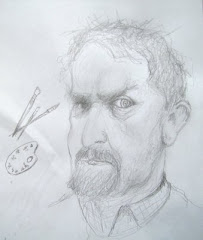
Sunday, 23 March 2014

THE OLD "EARL"

The first "Earl of Zetland" was launched on the Clyde in 1877.  At only 186 grt, she wasn't big, but she provided a lifeline service for the next 60 years, ferrying passengers, cargo and livestock between Lerwick and the north isles of Shetland.

In 1938, she was replaced on the route by the new "Earl of Zetland", but, on the outbreak of war the following year, the new ship was commandeered to perform Admiralty duties.  The old "Earl" was brought back into service on her old run for the rest of the war years, skippered by my uncle Adam Tait for this part of her long career.

My painting shows her steaming south through Linga Sound in a fresh northerly breeze.  The viewpoint is from Whalsay, looking westwards.  The original painting, with A4 and A3 limited edition giclee prints also available, can be purchased through the Gallery Shop pages of my website www.tait-gallery.co.uk

OVERTON, LEVENWICK

Before my mother moved into the Overtonlea Care Centre on 30th April 2012, I'd scarcely been down the road through Levenwick since my youth (and that's a long time ago!).  I have vague childhood memories of family picnics on the sandy beach below the hill.  From there we looked right across the bay at our home in Sandwick - it was far quicker by boat than by car over the miles of winding road along the hillsides.

There was one other occasion, back in 2004, when I visited my web designer, Roy Longmuir, at his home in Levenwick.  It was an exciting time for me, as we were setting up my website and The Tait Gallery was going online for the first time. The photograph of me on the home page article "About the Artist" was taken that day at the front of Roy's house.

The view in the painting shown above is from a little further down the Overton road, looking towards Sandwick, which has changed practically beyond recognition since my formative years.  One of the attractive things about Levenwick is the predominance of old -fashioned white-washed "but-and-ben" houses which still cling to to the steep hillside, and the more modern dwellings seem to be placed so as not to detract too much from from the traditional flavour of the scene.  In other parts of Shetland, building has been much less sensitive in this way, with clumps of wooden kit houses and glass-and-concrete monstrosities dominating the landscape.  I've grown rather fond of Levenwick, and not just because it is now my mother's home.

The painting, and limited edition giclee prints (both A3 and A4) are available through the Gallery Shop on my website www.tait-gallery.co.uk.

Monday, 17 March 2014

A PAIN IN THE NECK!

Osteoporosis?  Cervical Spondylosis?  Osteo-arthritis?  Something else equally horrible?  I don't know what the medical term for it might be - all I know is that it is a pain in the neck, and I've had it since last summer!  It's been a right old nuisance, affecting my artwork, my writing and practically every other sphere of activity in which I indulge.

For some time leading up to last summer, I'd noticed that my neck became painful when I was working at waist-height while standing.  Things like washing dishes, setting up my stalls or preparing food seemed to bring on an ache in the back of my neck.  When this occurred I would sit down for five minutes, the ache would go away, and I'd carry on as before - you know how you do!  But then, at the beginning of July, things changed.

After clearing up from one of my Saturday stalls, I developed serious pain, along with extreme stiffness, which meant that my head was pointing downwards most of the time. I had difficulty lifting it up, and I couldn't raise it at all when walking.  I went along with my head in a ridiculous stoop, unable to see much more than ten yards ahead of me..  When I first presented my problem at the Lerwick Health centre, the doctor told me there was little that could be done about it.  He couldn't prescribe anti-inflammatories for the pain, as I was already on medication for hypertension, and he gave me a programme of neck exercises, supposedly to make my neck more supple.  Surprisingly he didn't even suggest an X-ray.  I continued to look at my feet as I walked, now utterly depressed at the thought of my condition possibly being permanent.  Life continued to be a pain in the neck!

Even shaving was a problem - I couldn't get my head raised sufficiently to get the electric razor underneath my chin.  I went to see the chiropractor, and, through him, I paid for my own X-ray.  This showed a bit of wear and tear on the spine, with a couple of discs getting spongy, but little obvious damage in the neck area.  The chiropractor beat me up on a regular basis, but this only had the effect of shifting the pain around, as did the sterling efforts of the masseuse, who also had a go at solving my problem.  I now dreaded going to bed at night, as the first five minutes after my head hit the pillow were excruciatingly painful, before the pain settled down enough to allow some fitful sleep.

The doctor had reckoned that the pain was due to my work practice, and this may be true.  Most of my painting is done while seated at a table, with the canvas lying flat.  Certainly, holding my head concentrated in one position for some time, whether painting or writing, made my neck very stiff.  I tried a table easel, but this made very little difference.  It was the tension in my neck, as I held my head steady to concentrate on the brushwork, which seemed to cause the pain and stiffness.  All attempts at artwork now ceased.

What is normally a rare treat for me, and an opportunity which only comes my way once every five years or so, took place on the first Saturday in August.  I'd been invited to be one of the panel of arts and crafts judges at the Voe Show.  The weather was beautiful - breezy and sunny - and what should have been an absolute delight was completely spoiled by my pain.  The three hours of deciding what should get the honours among the many excellent exhibits was done through a dark veil of my own discomfort, which I was trying my best not to transmit to my fellow judges and helpers.  It made a chore out of what is usually a pleasure and inspiration.

In September, having had two months of barely tolerable pain (and a growing waiting list of unfulfilled painting commissions), I decided to have another go at trying to get someone interested in my condition at the Lerwick Health Centre.  And this time I met a doctor who took immediate command of the situation, and my life changed almost instantaneously.  She prescribed me an anti-inflammatory which was not in conflict with my other medication, and which substantially reduced the pain within a couple of days.  She put me in touch with hospital physiotherapists who helped me further..  She entered into an in-depth investigation of my problem, taking blood samples which revealed calcium deficiency, amongst other things, and which a daily intake of Vitamin D is now addressing.  I am now back doing artwork, and my embarrassing waiting list has diminished greatly.  Some of my recent efforts will be appearing here in the coming days.  It's so nice to be back!

The neck is still a bit stiff, and I'm having a bone scan at Aberdeen Royal Infirmary next month.  But the stiffness and pain are getting gradually less and I now hold my head up in public when out walking. I can look straight ahead of me, and round and about me, once more, and life is getting better again - yippee!

Sunday, 16 March 2014

THE "GIRL OLIVE" (II)

The Fraserburgh dual-purpose boat "Girl Olive" (FR369), rigged for drift-net fishing, leaves her home port to look for the herring shoals.   She holds the record for the fastest build ever of this class of 70-foot vessel. From the laying of her keel in early November of 1952, it took only six weeks to launch her fully-rigged. She sailed the same day, and landed fish that night!  Nowadays it takes that long to undergo the regulatory inspections!

This commissioned work was for a client in Australia.  I completed it finally in October, after a few months lay-off due to being poorly.  More on that subject shortly!

Sunday, 14 April 2013

THE "ALDEBARAN"


Here's the "Aldebaran", a wooden-built Danish trawler, tramping along in fresh weather east of Sumburgh Head.  She, and hundreds of others like her, used to fish around Shetland in the late 1960s and early-to-mid 1970s.  In bad weather, Lerwick harbour used to fill up with these, and other Scandinavian vessels, providing a valuable feed for my almost obsessional interest in these splendid little ships.

At around 65ft in length, the "Aldebaran" was built in 1960, was just a fraction under 50grt, and was powered by an Alpha 240bhp diesel engine.  According to the 1977 edition of Denmark's Fiskeri
Årbogen, she was owned by an A Bjerg of Harboøre, on the shoreside of the Nissum Bredning, which is an inlet of the large sprawling expanse of inland waterway which occupies a large part of the north-west Danish mainland.  How do I know all that geographical stuff?   I just looked it up in my Collins European Road Atlas, of course!  I've never been to Denmark, although some of my paintings have.  Regrettably they all had return tickets!

Why have I painted a Danish trawler?  Well, it could have been a Norwegian whaler or great-liner, or a Swedish "bung-bung", or a larger steam trawler from Germany, Poland or France, or any one of the many types of fishing boat which could have been seen in Lerwick harbour during my formative years.  The Danish trawler just appeared out of the mix somehow.  I like to indulge in a bit of nostalgia now and then as regards subject-matter, and, judging by my list of commissions over the past few years, I'm far from alone in this.  Many people reflect fondly on a time when boats were of a more graceful design, even if the work was back-breaking (the more so when the catches were bigger!).

The fact that this painting is of a Danish trawler is pure chance, then, and it's my entry for this year's OBA competition.  I was persuaded to enter again by an old friend, who told me to "do them one of my seascapes, and put my heart and soul into it!"  This is a best-can-do then, and I'll see what they make of it.  My picture of Lower Voe didn't seem to trouble the judges last year, but the administrator in charge of the entries says she loves my seascape.  I bet she says that to all the boys - wish me luck!


Sunday, 24 February 2013

CAT AND DOG


My creative visits to this blog have beeen so few and seldom over the past year that it scarcely merits the description.  I could roll out such excuses as feeling out of sorts and experiencing computer problems (both of which are true) but the fact is that, for whatever reason, my muse has been absent, and consequently so have I.

I've continued to go through the motions with my artwork, and the pre-Christmas stalls were very successful.  I hope you like my Cat and Dog painting (above), which was a rush job for a wedding anniversary present.  I didn't have much time to plan it properly, but I think that what I came up with just about worked.  The JPEG above has exaggerated the "blueness" of it quite a bit.

I'm hoping to get a good rant together for publication here, one of these fine days.  Let's face it, there's been plenty to rant about recently, and I've been going through a good few topics in my mind.  Please bear with me meantime - the muse will return to me soon.

THE "ST. NINIAN"


This is the second painting that I've done with a print edition in mind, prompted by requests from visitors to my Toll Clock Centre stalls (the first being the "Swan" at the back end of last year).  There is still a long list of gaps in my print and greeting card "repertoire".  According to the good folks who take the trouble to visit the stall, my display is the poorer for the lack of Whalsay, Burra Isle, "up nort" and Unst representation.  I'll do my best to make amends in the months ahead.

The MV "St. Ninian" was the third vessel to bear that name for the North of Scotland, Orkney and Sheland Steam Navigaton Company.  She was built in 1950, and ran a weekly service between Leith, Orkney and Shetland, carrying passengers and freight between these destinations.  When Leith ceased to be part of the company's operations, the ship was sold to Canadian owners for further trading in the early 1970s.  During the early 1980s, renamed "Bucanero", she was being used for excursions in the Galapagos Islands, but I have no knowledge of what happened to her after that.  Maybe somebody out there knows?

In my painting, she is pictured approaching Lerwick harbour in fresh weather, viewed from near the Bressay lighthouse, with the Scord of Quarff and Clift hills in the background.

THE "PILOT US"


This commissioned painting shows the 40ft seine-netter "Pilot Us" (LK271) coming in past the Bressay Lighthouse on a fine summer's evening.  This boat, built in 1931 at Fraserburgh, is now owned by Shetland Museum, after a long and successful fishing career for the Watt family of Scalloway.

I have a childhood memory of being one of a number of people standing on Blacksness Pier, Scalloway, looking at a huge skate lying on the foredeck of the "Pilot Us" - this would have been around 1960, I guess. At that time, she was one of a number of smaller fishing boats which went long-lining for better-quality fish during the summer months, the "Roost" off Sumburgh being a favourite "hunting ground" for them.

Wednesday, 5 December 2012

"ST. GILES" (II) IN ST MAGNUS BAY

This painting has been a long time in the making, having stood half-finished, since early summer, in a corner of my studio, while I got on with more urgent tasks.  Having "cleared my feet" of commissioned work, I was able to tackle my pending "on-spec" pictures, and this is the last of these.  It depicts the  second "nort boat" to bear the name "St. Giles", sailing south-westwards through St. Magnus Bay in fresh weather, having completed her day's business at Hillswick.  The photograph shows a slightly foreshortened version of the painting, there being more of the Hillswick Ness "banks" to the right of the ship on the original artwork.

The ship replaced the old "St. Giles", which had been lost after running aground in thick fog on Rattray Head in 1902.  The new vessel came into service in 1903 and, according to Alastair McRobb's excellent little book, The North Boats, was placed on the direct route, so the ship may never have been in St. Magnus Bay at all.  Not for the first time, my depiction could be a "dadbusted lie", as the magistrate said in the Comancheros film!

What McRobb's book does not tell us is what end the second "St. Giles" made.  Was she sold for further trading, or did she become a grounding casualty like her predecessor of the same name?  She is not in the author's list of north boats sunk by enemy action in World War I.  I would be very interested to know what became of this ship.

Last night I updated the website www.tait-gallery.co.uk by uploading the recently completed artworks (including the above) to the Gallery Shop pages.  If you live in the islands, come and visit my stall at the Toll Clock Centre in Lerwick on Saturdays 8th and 15th December.  The usual selection of prints and cards, including the new stock additions, will be on offer, and commissions can be discussed there too!  All of it is also available to buy online through the website.  Visit me on- or offline!

Sunday, 18 November 2012

THE "SWAN"

My latest painting shows Shetland's own tall ship heading southwards, with an easterly breeze in her sails.  This is the first time I've done a "portrait" of the old lady for a while, although she appears in some of my Lerwick harbour paintings.

The "Swan" was built at Lerwick in 1900, and spent her first few years, under Lerwick owners, rigged as a lugger, as she long-lined for white-fish in spring, and took on drift-net gear for the summer herring fishing.  She was bought by a Simpson-headed Whalsay partnership, who converted her to the fore-and-aft "smack" rig which she carries today.  The sails disappeared as her main means of propulsion when she had an engine installed, and a wheelhouse fitted,  in 1935.  She fished on in this new "rig" until around 1960, participating in the new seine-net white-fishery from the late 1940s, long after most boats of her vintage had disappeared from the commercial fishing scene.  She began a new career as a pleasure craft and houseboat south of the border, but fell into neglect, and actually sank at her moorings in W Hartlepool on several occasions.  She was finally rescued from her plight, and the Swan Trust was formed in 1990 to restore her to her former glory as a sailing vessel.  Her transformation was completed in 1996, since when she has been in regular use as a sailing boat, both running "tours" around Shetland, Orkney and the Western Isles, and competing in Tall Ships Races.

Olsen's Almanack, in the 1938 and 1950 editions (and presumably the ones in between too!), has her details as 18 tons nett, engine 21hp, and owned by T H Simpson and others, Whalsay.  Manson's Shetland Almanac and Directory of 1949 lists her as 44.1 tons (presumably gross!), 60.4 keel length, and 75hp of engine.  I don't begin to understand the difference in engine rating between the two publications, but no doubt a marine engineer will tell me!  I have read somewhere else that her overall length is 68 feet.

I've painted her against a background of the Bressay lighthouse and the cliffs of the Ord and Bard on the south end of the island.  The painting is currently in for scanning at my printer's, and I have been promised giclees of this work (both A4 and A3) to be ready for next Saturday's Toll Clock Centre stall.  They'll also be available for sale online (as will the original painting) through the website.  www.tait-gallery.co.uk

Have a good week!

Sunday, 4 November 2012

A HAUL OF HERRING AND A PILOT BOAT


I anticipate no gasps of utter astonishment when I reveal that the latest works to appear in the Tait Gallery are both seascapes.  They were both commissioned.

One of them is the third in a series featuring the Gamrie dual-purpose boat "Silver Wave" (BF372).  She is pictured hauling a good shot of herring, attended by the ubiquitous flocks of gannets, fulmars and gulls, as the crew perform the back-breaking operation of getting the heavy shot aboard.

The other painting is of the Lerwick pilot boat "Knab", viewed from the headland from which her name derives, as she re-enters the harbour after performing another "escort" duty.  This was the first of two vessels to bear the name, built in the late 1980s and replaced by a more powerful state-of-the-art version around 2005 (I'm not sure of my exact dates here!).

I'm currently working on a painting of the local tall ship "Swan".  I'd originally planned to have prints of this ready for my first pre-Christmas stall at Lerwick's Toll Clock Centre on Saturday 17th November.  It now looks as though I'll miss my own deadline by a week or two, but I should have the giclees available by the end of the month.  Watch this space!

Sunday, 30 September 2012

CONZIE CASTLE

The weather was fair as we sped south towards Huntly that evening in late June of 2009.  The colours were magnificent, as low cloud, driven by a southerly breeze, sometimes partly obscured the sun, creating indigo shadows here and there among the golden light which played among the fields, hedgerows and conifer-clad hilltops.  We were passing through the parish of Forgue, when the view from my passenger window suddenly yielded a sight which made me catch my breath in wonderment.

Above the roadside hedgerow had appeared the top of a tall single crowstep gable which adjoined an almost-complete four-storey wall.  A tree was growing in the space which had obviously been occupied by whatever had been between this wall and gable and its now absent counterparts.  In the prevailing light of that evening, the sight was spectacular.  I asked my companion what this building had been, and exposed a gap in her hitherto comprehensive knowledge of the area.  I was determined that, on my return to Shetland,  I would find out what I could about this magnificent ruin.

The OS map of the area revealed it to be Conzie Castle.  Further online investigation led me to the fact that it had also been known as Bognie House, and it had been built, around 1670, by one George Morison, who had acquired much of the land in this area, through forfeiture, from Viscount Frendraught, who had taken the losing Royalist side, alongside the Marquis of Montrose, in the Scottish episodes of the Civil war of the mid-17th century.  According to the Canmore site record, the building is "a tall four storey rectangular un-vaulted palatial structure, with crowstep gables and the remains of corner turrets".  An ambitious project, then, but now it's a ruin, standing in a field, without even a footpath leading to it, as far as I can see.

Why Morison built Conzie/Bognie Castle is unclear, but it seems that it was never lived in.  There had been an earlier, equally imposing building (Pennyburn) to the east of Conzie, as a map of 1776 shows two mansions on the Bognie estate.  The ruins of a "dookit" also stand quite near to the east of Conzie, although no trace remains of Pennyburn, apart from the stream which gave the building its name.

Later that summer, I returned to Banff, where I had been staying when I discovered Conzie, to take down my paintings exhibition at Duff House.  The setting up of this display had earlier led me to this car journey down the A97.  My brother was helping me with the transport of the pictures, and he agreed to my suggestion of a run down to Huntly for our lunch, so that I could get another look at Conzie.  On this occasion, however, the weather was not so kind.  It had rained for about 24 hours (and most of the intervening summer apparently!), and this had just cleared when we reached the castle ruin.  It was difficult to find a place to stop on this fast section of roadway, and, when we did, I got a few photographs of the grey sodden-looking scene, in which the rosebay willowherb seemed to be the only thing thriving in the conditions.  Everything else looked defeated and depressed somehow.

So what you see above is my attempt to re-create a moment in time, a fleeting glimpse of a spectacular ruin on a June evening more than three years ago.  It has taken me four months of intermittent effort to get close to that, and this is all that we poor artists can do.  This is the third of the must-paint scenes which stem from the journey of that magical evening, the others being Fordyce and Boyndie Bay.  Enjoy!

Sunday, 23 September 2012

THE BRESSAY LIGHT

I wonder just how often I've painted pictures of the Bressay lighthouse over the years.  It must be of the order of a hundred times, considering the different viewpoints, and it was nearly always as a background feature to some ship or other making its entrance to (or exit from) Lerwick harbour.  I observe that, of the five paintings I have "on the stocks" at the moment, two of them fall into this category.

The lighthouse has stood there for a hundred and fifty years, and will probably stand for a hundred and fifty more.  One Swedish yachtsman of my acquaintance describes it in his log-book as like a white monastery, in the account of his first trip to Shetland many years ago.  It will probably never provide a cloistered existence, but the buildings have been used as self-catering accommodation (for monks and any other visitors who choose to stay there) since the Stevenson-designed lighthouse went automatic around 1990.  Before then, the living quarters were for the keepers and their families.

But, for a century and a half, the light has flashed out its double signal in the darkness, visible (assuming clear enough conditions) for 23 miles.  It could be seen from ships passing south of Sumburgh Head, in "da Roost" (the tide-race which reminds sea-travellers that our archipelago is set between the North Sea and the Atlantic Ocean).  It was always there, a regular blink of reassuring white against the surrounding pitch-blackness of everything else.  That is, until a week past Wednesday, when the beam was turned off - for good.

It has been replaced (through the good offices of Lerwick Port Authority, not the Lighthouse Board) by a lower-situated LED device which is visible for ten miles.  This is quite adequate for vessels approaching or leaving the harbour, and most boats have sophisticated electronic navigation equipment, which renders extraneous visual landmarks unnecessary (until the technology breaks down, that is!).

What's my problem with the old light being turned off, then?  Well, for a start, I liked it there, as did most other people living within the scope of its beam, and there are too many things being arbitrarily shut down, turned off or otherwise terminated nowadays.  And, even with the bank of electronic navigation equipment in front of him, the watchman in the wheelhouse of the fishing boat passing through "da Roost" still liked to cast his eye out the starboard window (if the boat was steaming east) to catch sight of the distant white blink and have his bearings (psychologically as well as electronically and navigationally) confirmed.

Seafarers (and others) like visual points of reference like lighthouse beams in their lives.  In Basil R J Anderson's Shetland dialect poem "Maunsie's Crö", the poet tells how the crö (a circular stone enclosure for growing plants) on the hilltop, although never having been intended for this purpose, became a "meead" bearing for fishermen out at sea, and there have been many examples of real-life "crös".  One such was the red light on top of the main TV transmitter mast on the Wart of Bressay.  It was removed in 1990, but, because of its intensity and height (about 900ft) above sea level, it could be seen by boats up to forty miles out to sea to the east of the islands, and it became a well-known night landmark for fishermen from a' the airts working the fishing grounds in that area.

And the reason for the Bressay light being switched off?  I'm afraid that it comes down to that old chestnut again - money, or the recently-perceived lack of it!  It's just another example of how the government is trying to save a few quid by squeezing the budgets of the various agencies, departments, quangoes and local authorities, and this includes the Northern Lighthouse Board.  Our historical beacon has become another casualty of a corporate strategy which defines price without admitting any consideration of value in its cost-cutting exercises.


We can only speculate as to what beacon might be next on the chop list.  The road up to Sumburgh Head is close to collapse under the weight of Amenity Trust plans for the lighthouse buildings there.  I don't suppose these include any safeguards for the future of the triple-flash beam sequence which was a background feature of my formative years at Sandwick schoolhouse.  It would be a fortunate result of this little personal piece of prose, if the bodies which are addressing themselves so zealously to the "slockin" of lighthouse beams and other elements of our lives' facilities, that it may be much more than a flash in the dark they are extinguishing.


Sunday, 9 September 2012

L'ENNUI AND KEITH RICHARDS

I know I shouldn't , but I'm so bored that I've decided to upload this JPEG of my painting of the rock legend, and to heck with the consequences!  A friend of mine commissioned the work, and I'm profiting none financially by publishing it here, so I hope I'll get away with it.

Once again, I have found myself, as I have on other Sundays, in front of a blank page, hoping that the Muse will return soon from her sick leave.  Seldom have I felt less motivated to either paint, write, or otherwise create anything at all, than I have during this non-event of a Shetland summer.  The artwork I have been doing has been mostly on commissions, and I have no exhibitions planned for the foreseeable future.  I entered my "Lower Voe" painting for the Oldie British Art Award competition, and it didn't make the short-list of ten.  This came as something of a relief to me, as the problems associated with getting the obligatory portfolio of work and myself from Shetland to London (which would be an obligation for finalists) was causing me some anxiety, as I don't have either a car or a licence to drive one, and I've never been to the Metropolis before!  My feet are of a particularly claggy form of clay, and I've never had any desire to travel - anywhere!

A lot of my time, over recent months, has been spent clearing out my mother's home at Whiteness, to get the place ready for the new occupants, who will be moving in in the next month or so.  My sisters and I, ably supported by my nephew Kenneth with a hired van, have been carting tons of stuff off to the Rova Head dump, and putting further copious quantities of clothes, furnishings and bric-a-brac to charity shops in Lerwick.  I was surprised when the local re-cycling firm Shetland Scrapstore accepted three old typewriters for their renovation enterprise scheme.  A numismatist is to visit me on Tuesday to look at my late father's coin collection (which he kept in two old sweetie tins in the bureau of his study), and I've made up a package of over a hundred used foreign stamps, off the many letters and postcards we found, which I'm sending off to the MS Society of Scotland, in the hope that they can still use them.

And all the time we have the uneasy feeling that we are callously and arbitrarily trashing the life of our dear mother, who now resides, apparently quite happily, in the Overtonlea Care Centre at Levenwick, a parish in the south mainland of Shetland.  The stage had been reached when she was no longer able to live in her own home, and she had become resigned to this fact when the vacancy arose at the centre at the end of April.  Since then, we have all been engaged in the various practicalities and administrative matters to do with her change in residential status and the sale of the house.  For nearly sixteen years, ever since my father died in October 1996, I have been my mother's care attendant, getting her shopping and pension, doing bits and pieces of work around the house and garden, helping her with appointments at various places, and any other matters arising.  None of it has felt at all burdensome to me, and I feel rather out on a limb now that the moment (which I have known was approaching for the past sixteen years) when my attendant services would no longer be required, has arrived.

Now, for the first time in my life, I feel a little lonely and vulnerable.  Long ago, I would have dispelled such negativity at the pub, life always having looked rosier through the bottom of a pint-glass. But that was in a sweeter bygone age, when bars were warm, friendly and exciting places where dreams and schemes would materialise and fade among my smoke-rings.  Since the Scottish government's Pick-A-Soft-Target-and-Hit-It-Hard act, pubs have taken on the clinical atmosphere of a dentist's waiting-room, much fewer people bother to go now, and many bars are closing down as an inevitable consequence.  I think the last time I visited my local (the Lounge!) was back in May, when friends of mine were up in Shetland for the Classic Motor Show.

In short, the only way I can avoid boring myself to tears is to work, and, in my line as a professional artist, it's difficult to maintain a consistent level and standard of work over prolonged periods of time.  One needs to re-charge the batteries, so to speak, and that seems to be what I have been doing lately.  I just hope the gauge registers "full" soon.

Sunday, 22 July 2012

SUMMER GLOOM AND ROLLING STONES

A strong south-westerly is blowing rain against my studio window as I write this long-overdue blog post.  I hope that the weather will have improved by the time I commit these lines to my Blogger dashboard.  Our Shetland summer has been chilly and gloomy so far, but we haven't (until now!) had the volume of rain which has been saturating many other parts of Britain recently.  I take it the hosepipe ban has been lifted now!

I've now held my first five Saturday stalls of the summer at the Toll Clock Centre, and the takings have been varied, but I find that my presence there is an important and useful link with the public.  As well as meeting old friends, making new ones, and selling a few prints and greeting cards, I pick up a few painting commissions.  I've almost finished the first of these now - a portrait of Rolling Stone Keith Richards!  Sadly I won't be able to display it online, as I'll be infringing someone's copyright if I do, and that could be costly.  At the moment, you'll have to take my word for the fact that canvas Keith is much too pretty, and I'm going to have to rough him up a bit!

There are no plans for any more exhibitions in the near future.  I entered the Lower Voe painting (which I displayed here a couple of months ago) into the OBA art competition, run by the Oldie magazine. I should know by mid-August if I've made the short-list of ten for the big prize of £5000!  And here's the bit I don't like - the ten finalists have to come to London (complete with a saleable portfolio of works) for a presentation do (I forget where exactly), and the logistics of this is causing me loss of sleep.  I don't have my own transport, so I don't know how I'm going to get myself and all my baggage to a venue in a city I've never been to before.  So I'm half-hoping that my work is NOT chosen for the short-list!

A feeling of general unease is pervading my whole being at the moment.  I need to move on (onwards, upwards, sideways or backwards, but ON!) from the disaster of Catterline at the turn of the year.  The fact that I no longer have duties to perform for my mother at Whiteness (since she became a permanent resident at the Levenwick care centre) means that another element of my weekly routine is no longer there.  The times are a-changing, and things will never be quite the same as before.  My sisters, brother and I have been keeping in closer contact of late, and I'm looking forward to the visit of my youngest sister Angela, who is coming to Shetland for a few days from next Thursday.  We've planned a little party for our mother's 96th birthday in the Overtonlea Care Centre on Monday 30th July, and I'm looking forward to that little soiree very much.  All we need is for my brother to make a surprise trip up from Aberdeen, and we'll all be together again for the first time in a good few years.  Strange - we were all so very different, and yet so close.

I promise to have some more artwork to show you soon!

Sunday, 10 June 2012

PIN BACK YOUR LUGHOLES!

I've got big ears.  They stick out a a grotesque angle from my head, and, whenever I get a close haircut, the silhouette of my bonce bears a remarkable resemblance to a prestigious golfing trophy.  I can wiggle my lugs about, and I've considered the idea that, if I could develop these muscles a bit, I could train them to become midgie repellant flaps during summer walks.

It would indeed be a good idea to find an alternative use for my ears, as I have been profoundly deaf in the right one since I contracted mumps at age 11.  "Eh?  What?", I hear you gleefully reply (everyone does it, and everyone finds this an equally apt and amusing response!).  True, I need to wear glasses for reading and writing nowadays, so it's always handy to have a place for the legs of these to sit on.  Otherwise, I could as well have followed Van Gogh's (or was it Gauguin's?) example, and cut the ridiculous appendage off.

I made the discovery that I was deaf in one ear by the usual revolting schoolboy habit of "fiddling with my bits". I noticed that, if I stuck my finger in my left lughole, I could hear nothing at all, whereas if I did the same with the right one, everything sounded normal.  I pondered this issue for a time, before broaching the subject with my parents.  Medical appointments were made and kept, and my father and I appeared at a consultant's surgery in Lerwick one fine morning.

I forget the exact location where the consultation took place - I think it may have been the old Gilbert Bain hospital, which is now the local funeral director's parlour.  My father and I were ushered into a room which seemed to contain little else besides a huge bank of electronic equipment, before which sat a tweedy version of Star Trek's Uhura (complete with sensible shoes!).  I was duly wired up, with earphones, to this massive apparatus.  The equipment bleeped, whistled, "tooed" and farted away as the woman twiddled with her knobs, and if she had informed us of the approach of klingons on the starboard bow, I would have been no less clueless as to what the object of this exercise was.  My father may even have leaned over and informed me, in conspiratorial tones, "It's life, Jim, but not as we know it!".  At the end of it, the specialist had to inform me that I was profoundly deaf ("Sorry, YOU'RE DEAF!") in my right ear, and there was nothing they could do about it.

Needless to say, I have been stone deaf in one ear all through the ensuing half-century.  In previous posts, I have touched on the embarrassments and general bothersomeness of hearing in mono rather than stereo.  I got used to it, and even learned to turn it to advantage on some occasions.  I consider myself lucky - it could so easily have been both ears!

I did get hot under the collar when a certain scientist, whose name I've conveniently forgotten, produced a theory, based on the scantest of evidence, that there was a link between the MMR vaccine and autism.  His publication was meat and drink to the media, who go into a gleeful feeding frenzy over such scary stories (the truth or otherwise behind them completely immaterial), and the rate of uptake of the vaccine plummeted.  There are no statistics available as to the number of children who are now profoundly deaf through contracting mumps as a result of this journalistic coup.  As always, the people who caused this scare aren't hanging around to admire their handiwork, now that the theory has been discredited.

Stanley Baldwin was quoting his uncle Rudyard Kipling when he delivered the famous phrase, "Power without responsibility - the prerogative of the harlot throughout the ages."  He was referring to the press barons, melords Beaverbrook and Rothermere, at the time.  Plus ça change!  Eh?  What?

Tuesday, 5 June 2012

LOWER VOE

The latest creation to appear in the Tait Gallery is a landscape depicting the area around Voe Pier in Shetland.  The picture incorporates a fair number of features, but I hope it doesn't look too crowded with detail.  In the back of my mind is the notion that I might enter this into an art competition, run by the Oldie magazine, which, it is proposed, will provide an antidote to the kind of charlatan-produced ordure sponsored by Charles Saatchi and his ilk.  I have no expectations of winning, but at least I will have entered something which reflects the spirit of the contest.

The trouble with the competition is that I'm only allowed to enter one work for it, otherwise I might have hedged my bets with a seascape (which best reflects my normal artistic output) and perhaps a harbour scene.  There would probably be far fewer seascape entries (we nautical painters are much fewer in number than workers in other genre), but the chances are that the judges will have had unfortunate experiences (if any at all) with lumpy seas. This may well cloud their judgement as to depictions of it, leading them to a bias in favour of landscapes, portraiture and still life.  I've only got one shot at this, and I'm thinking of entering the painting shown above.

The painting is of Lower Voe, viewed from the pier, looking roughly north-eastwards .  I used one of my own digital images of the scene, and I've added a couple of children playing in "da ebb" and a few lobster creels, "burrups" and netting to replace the stack of yellow fish-boxes which was in my original photograph of the scene.  I thought that the bright gold would be too much of an eye-pull from the rest of the picture.  I've taken a small amount of artistic licence, therefore, but it is still far from having Saatchi inclusion potential - it doesn't smell!  I'll leave that element of ambience to your own sensual memories and fertile imaginations!

Whatever happens to the original painting, it's going to be available shortly as a giclee print.  Come along to my Saturday stalls at the Toll Clock centre here in Lerwick (starting on 23rd June).  They'll be for sale there in A3 and A4 size, along with many other good things.  See you there!